Compliance Training You Can Stand Behind

Stay confident that every training requirement is met, and ready to prove it. EasyLlama helps Legal and Compliance teams maintain a defensible program as laws and the workforce change.



Why Legal & Compliance Teams Choose EasyLlama
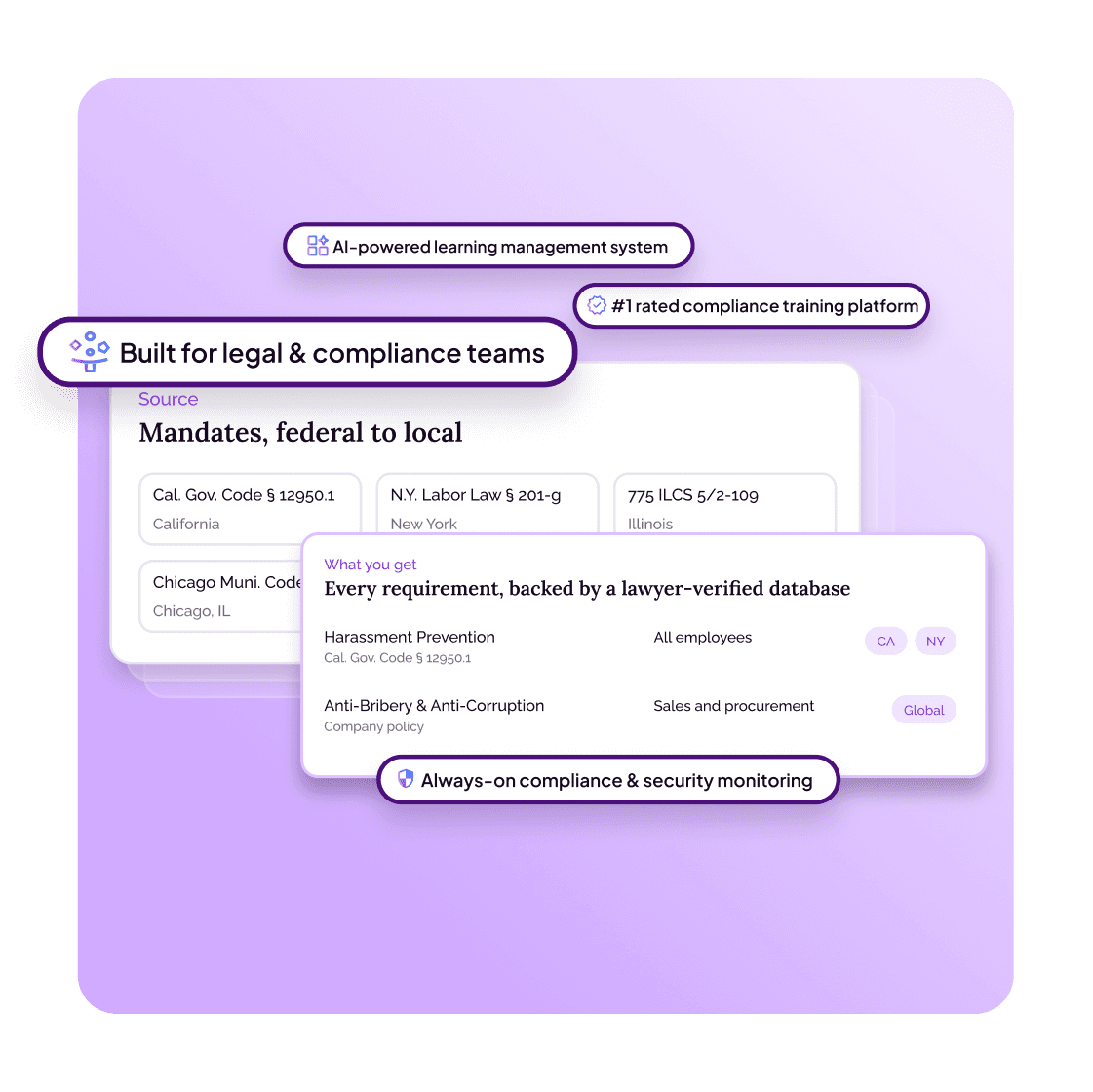
Courses are reviewed for accuracy, refreshed every year, and updated again when new laws take effect, so the material employees see keeps pace with the rules it's meant to cover.

The Content Your Team Needs

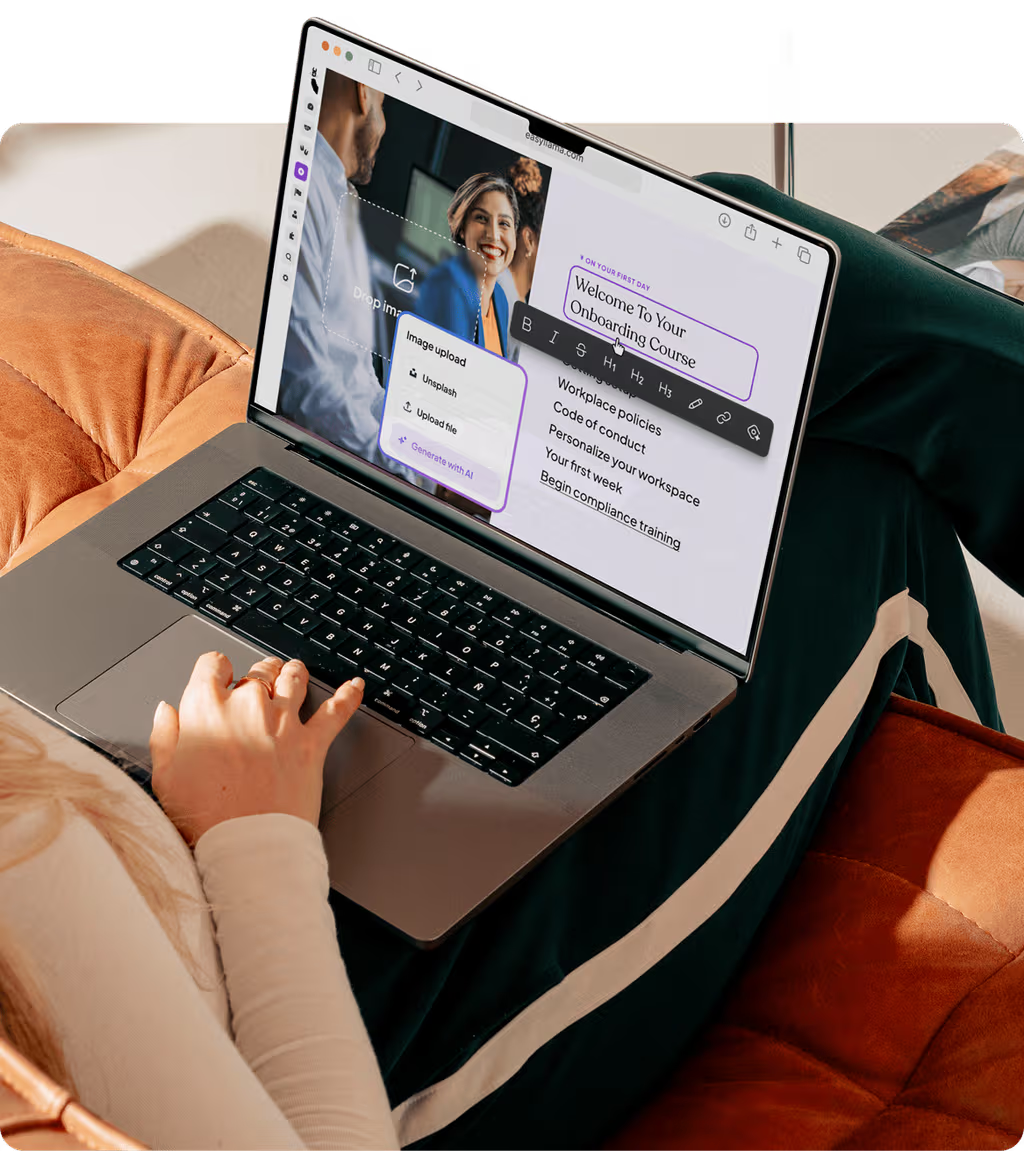
Courses that address conduct, bribery, and harassment risks before they turn into legal exposure.



How Rivia Mind Saved 59+ Hours on Requirement Research

Rivia Mind swapped manual, state-by-state checks for Compliance Advisor, trained 175+ employees across 23 locations, and now rechecks its program quarterly as it expands into new states.
How It Works
From the first requirement check to the final completion certificate, every step leaves a record.

See What Applies
Map headcount, locations, and roles against 800+ lawyer-curated and verified mandates in Compliance Advisor, with the reasoning behind every...

Stay Ahead of Renewals
Schedule recertifications on each mandate's cycle with automated workflows, and send reminders before due dates as headcount and locations s...

Prove It on Request
Pull completion histories, certificates, and timestamps from customizable dashboards, and share Compliance Advisor's executive summary with...
Helping over 8,000 organizations create a safer, more productive workplace
















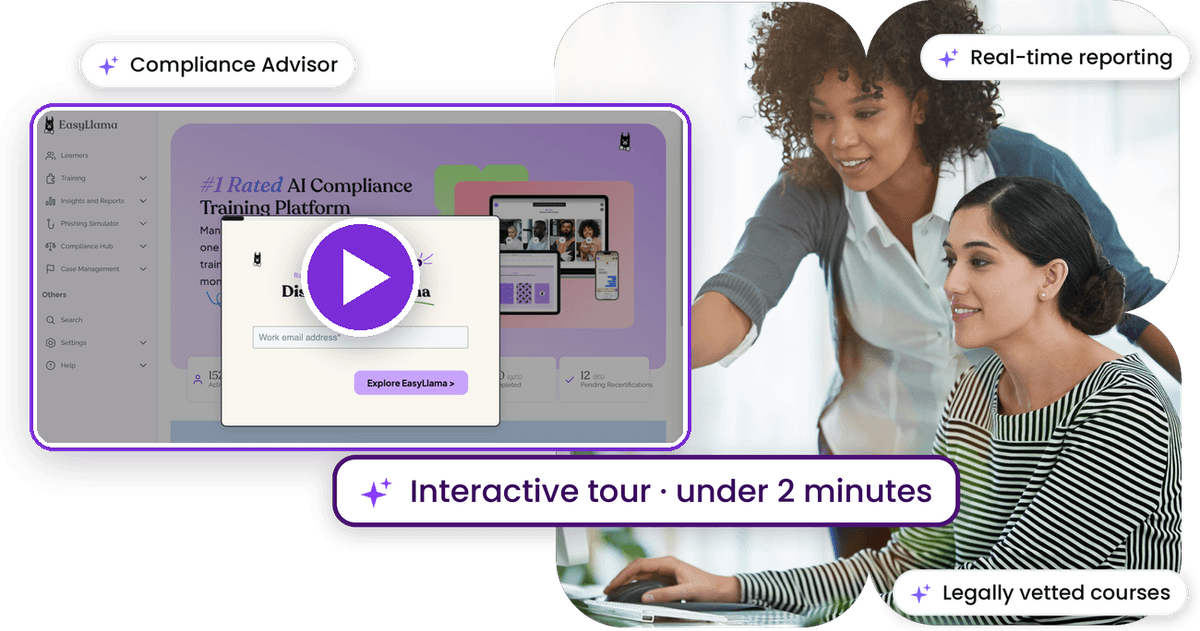
See EasyLlama in Action
Take a quick, self-guided tour of EasyLlama at your own pace. No scheduling or sales call required.
Legal & Compliance Training FAQs

- No single federal law requires all employers to provide general compliance training, but several federal rules require training in specific situations. OSHA standards require training for certain workplace hazards, and the HIPAA Privacy and Security Rules require covered entities to train their workforce on protected health information. The EEOC does not mandate harassment prevention training for private employers, but it recommends it, and many states require it.
- Strong training records show who was assigned each course, when they completed it, which version of the content they took, and any certificate issued. Some states also set retention periods. California, for example, requires employers to keep harassment prevention training records for at least two years. Centralized, timestamped records make it far easier to respond to audits, agency inquiries, or litigation.
- Multi-state employers manage different requirements by tracking obligations based on where each employee actually works, including remote employees working from home in another state. Many organizations apply the strictest applicable standard across similar roles to simplify administration, while still meeting location-specific content and timing rules. Requirements should be reviewed whenever the company enters a new state or laws change.
- Yes. Compliance mapping tools compare organizational details, such as headcount, industry, employee roles, and work locations, against a database of legal mandates to show which training obligations apply. EasyLlama's Compliance Advisor does this using 800+ lawyer-curated and verified mandates, which reduces the manual research Legal and Compliance teams would otherwise do state by state.
- EasyLlama connects each part of a defensible program in one place: requirement mapping through Compliance Advisor, legally vetted courses that are updated as laws change, automated recertifications, and audit-ready completion records. Legal and Compliance teams can see what applies, confirm it was assigned, and produce documentation that shows when each employee completed it.
View More Solutions
Explore other ways EasyLlama can support your organization’s compliance and workplace training needs.