Microaggressions
Everyone has unconscious biases and has often committed a microaggression in some way. If we work on becoming aware of our unconscious assumptions, beliefs, and attitudes, we can strive to reduce our potential for committing microaggressions.
Unconscious Bias vs Microaggressions
Unconscious bias is a type of bias that a person may not be aware of having, but which affects their behavior and decisions. Microaggressions, on the other hand, are subtle, sometimes even unintentional, slights or insults often directed at marginalized groups. While unconscious bias is often subconscious and unintentional, microaggressions are conscious choices made by one person to another, often with the intent to demean or belittle. Both can have a detrimental impact on the lives of those affected by them.
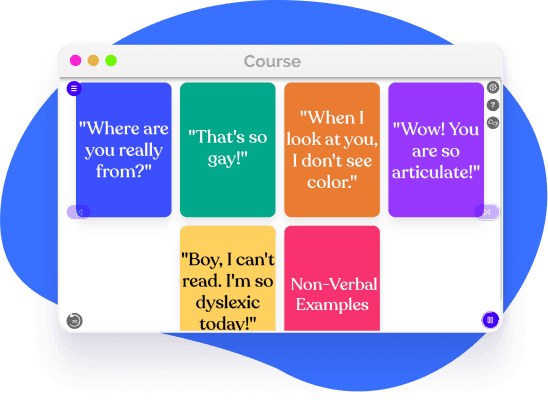
Here are some common examples of microaggressions that you may be familiar with.
A person who makes this statement might think they are saying a good thing, but this is an example of a microaggression. This comment denies the person of color's ethnic and racial experiences.
This comment sends a message of surprise that the person of color is capable of speaking so well. The person making the comment might think it is a compliment, but in actuality it is a microaggression because it puts the group that the person of color belongs to in a negative light.
This statement is made when someone assumes a person of color should be from somewhere foreign based on how they look. For example, assuming an Asian American must have been born in China. This is a microaggression because it implies that the person is different and not part of the dominant group.

Learning from Experience
Being called out for microaggressive behavior, even if it was unintentional, can be embarrassing and stressful. You might even become defensive or react negatively. However, if you find you have done or said something inappropriate, hurtful, or harmful, there are steps you can take to help respond appropriately and to learn from the experience.
Steps to take when accused of Microaggressions
Here are some appropriate steps to take when accused of committing microaggressions in order to ensure a respectful, productive dialogue and to reduce the potential for future microaggressions.
Here are some myths to look out for:
- -
Stop and take a moment
- -
Learn about intent vs impact
- -
Remember, it’s not about you
- -
Apologize for your mistake
- -
View the moment as a learning opportunity

Minimize Microaggressions in the workplace with Training
Unconscious bias training can help to minimize microaggressions in the workplace by providing employees with the knowledge and tools to recognize and address implicit biases. This type of training can help to foster more inclusive and equitable environments by helping employees to better understand the impacts of their words and actions on their colleagues.

Helping over 8,000 organizations create a safer, more productive workplace


















EasyLlama’s online training course helps prepare employees to navigate unconscious biases. The course covers different types of bias and shows how biases can hinder inclusivity in the workplace and lead to harmful microaggressive behaviors. The course covers:


 Get more from EasyLlama