What is a SCORM-Compliant LMS? Here's How to Choose the Right System



Discover what a SCORM-compliant LMS is, how it works, and how to choose one that fits your training goals, compliance needs, and tech stack.
Discover what a SCORM-compliant LMS is, how it works, and how to choose one that fits your training goals, compliance needs, and tech stack.
Test Your Compliance
Find out if your company is compliant in two minutes with our free Compliance Grader.
Get Your Free ReportWhat is a SCORM-Compliant LMS? Here's How to Choose the Right System
A SCORM-compliant learning management system is one that follows the SCORM standard—a universal format that makes it easier to create, share, and track training across different platforms.
For HR and L&D teams, SCORM compliance means fewer compatibility issues, less manual work, and better results from every course. These systems make training consistent, trackable, and ready for audits. They also protect your investment by allowing you to reuse and update content without having to rebuild from scratch.
EasyLlama’s LMS supports SCORM and other major content formats, so teams can upload custom training and stay audit-ready with minimal effort. With built-in AI tools and real-time reporting, it’s a modern solution for today’s training demands.
In this guide, we’ll break down exactly what makes an LMS SCORM-compliant, what features to look for, and how to find the right platform for your organization. If you're evaluating LMS options, start here.
What is a SCORM-compliant LMS?
SCORM stands for Sharable Content Object Reference Model. It is a set of technical standards that ensures eLearning content can be used across different learning management systems. A SCORM-compliant LMS is a platform that accepts SCORM packages and allows them to function properly, meaning it can launch, track, and report on SCORM-based courses.
For HR and learning teams, this means training materials can be created once and deployed widely, without having to rebuild content for every platform. It also means completions, scores, and time spent can be tracked consistently across systems.
SCORM-compatible systems reduce technical friction, support course reuse, and give teams more control over how training is delivered and measured, without needing deep technical knowledge to get started.
How SCORM compatibility works in learning platforms
SCORM has evolved over the years, with SCORM 1.2 and SCORM 2004 now being the most commonly used versions. At its core, SCORM defines how eLearning content and an LMS talk to each other using a shared set of rules. These rules make sure that important details, like course completions, quiz scores, and time spent, are tracked and reported accurately.
Behind the scenes, each SCORM package includes both the course content and the tools needed to communicate with the LMS. When someone starts a course, the system quietly handles the data exchange in real time. This means learners can focus on the training itself while the LMS takes care of logging progress, capturing results, and supporting compliance reporting without any extra effort.
Benefits of SCORM compliance for organizations
SCORM compliance gives organizations the ability to manage, measure, and deliver learning content in a consistent and scalable way. It also ensures training remains effective as content or platforms evolve.
These are the most important benefits:
- Content portability: SCORM packages can be moved between platforms without breaking functionality, preserving your investment and simplifying system upgrades.
- Reusable training materials: Courses can be created once and deployed across multiple teams, regions, or roles without duplicating effort.
- Reliable progress tracking: Track completions, scores, and time spent with accuracy that supports both learning goals and compliance audits.
- Consistent user experience: Learners interact with content the same way across systems, reducing confusion and support requests.
- Long-term content stability: SCORM ensures your content stays usable even as platforms change or grow over time.
EasyLlama combines all of these benefits in one platform, making it easier to manage training and scale learning across your organization.
How to evaluate a SCORM-compliant LMS
Choosing the right SCORM-compliant LMS starts with understanding what features and capabilities actually matter to your team. From core SCORM support to user experience, reporting, and integration, every part of the system should align with your training goals and compliance requirements.
Below, we’ll break down how to evaluate each area.
Core SCORM capabilities to look for
To evaluate a SCORM-compliant LMS, start with the essentials. The platform should fully support SCORM packages, streamline content management for admins, and work across different formats and tools.
- Support for SCORM 1.2 and SCORM 2004: Ensure the LMS can run both common SCORM versions to maximize compatibility and content reuse.
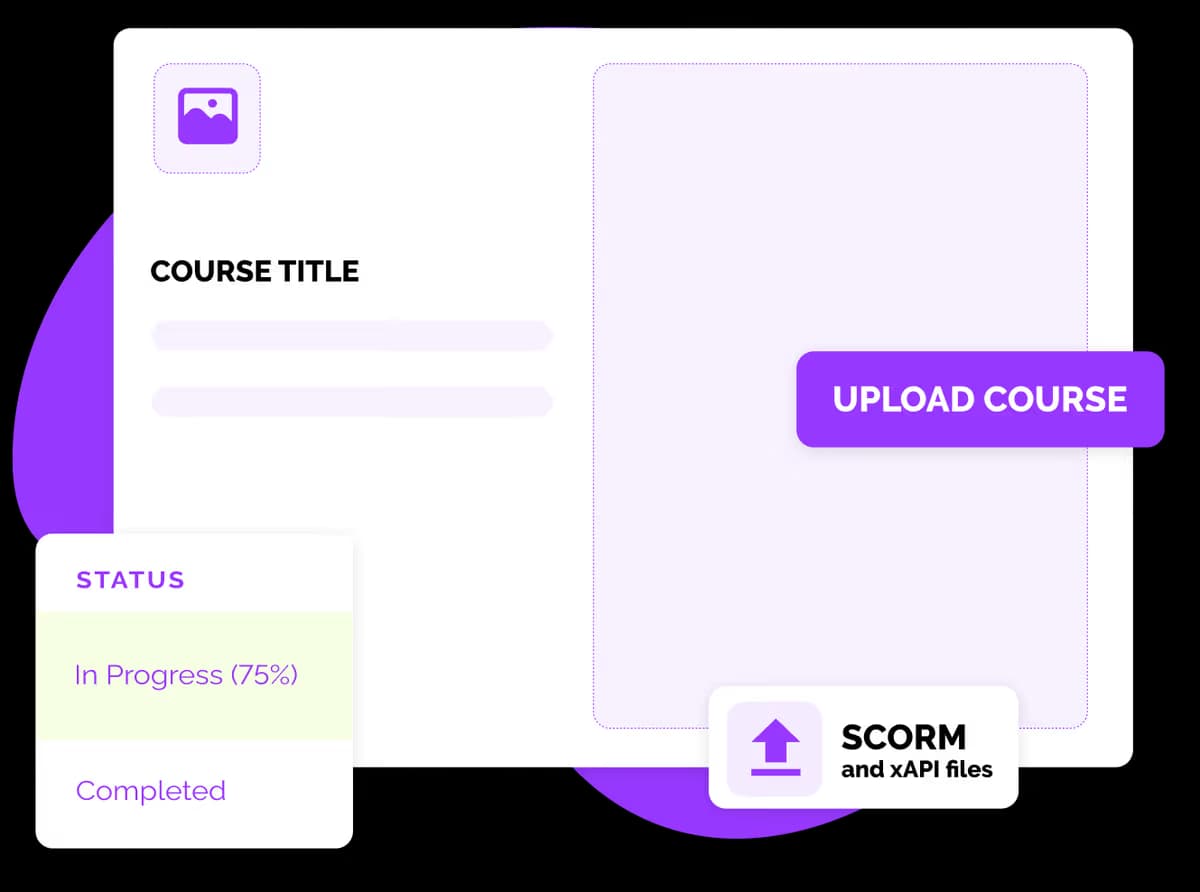
- Easy upload and import of SCORM packages: Look for drag-and-drop uploads or bulk import features that eliminate the need for technical setup.
- Compatibility with third-party content and multiple formats: The system should allow you to mix SCORM content with other formats, including xAPI, video, and PDF.
- User-friendly content management experience: A clear, intuitive backend should help admins upload and organize content without relying on IT support.
EasyLlama supports both SCORM 1.2 and 2004 and simplifies course uploads with a clean admin dashboard. Built-in AI tools and automated updates help reduce manual upkeep while keeping training compliant and easy to manage.
Align platform features with organizational needs
To find the right SCORM-compliant LMS, the platform should do more than check a technical box. It needs to match your organization’s structure, goals, and training priorities. Start by identifying what your teams need today, and how those needs will evolve.
Here are key areas to assess when aligning platform features with your goals:
- Internal training goals and regulatory obligations
- Types of training, such as harassment prevention, safety, and DEI
- Support for SCORM alone or in combination with xAPI, AICC, and other formats
A strong SCORM LMS should flex to your compliance needs while supporting scalable learning experiences. EasyLlama offers SCORM-compliant courses across core training areas, making it easier to meet regulatory requirements and support a wide range of learners.
From compliance to professional development, your platform should adapt to how your people work, not the other way around.
Look for robust tracking and compliance reporting features
SCORM-enabled LMS platforms give HR teams visibility into learner activity at every level. From completions to time spent, they provide the data needed to meet compliance standards and improve training effectiveness. A strong LMS should surface this information in real time and present it in a way that is easy to interpret and share.
You should be able to track:
- Course completions
- Quiz and assessment scores
- Time spent per module or course
- Learner interaction and navigation patterns
This kind of reporting matters for more than performance. It supports compliance audits, helps HR document mandatory training, and gives leaders insights into where additional support might be needed.
EasyLlama makes it simple to access these metrics in one place. With built-in dashboards, automated reminders, and audit-ready exports, your team spends less time chasing down data and more time making informed decisions.
Check for seamless integration with HR tech stack
Integrations can make or break the long-term value of your LMS. Connecting with your HRIS, payroll, and onboarding tools means less manual work and better alignment between training and each employee’s role, department, and status.
When your systems work together, assigning the right training happens automatically and learner progress stays current without extra effort.
This kind of connection supports both compliance and efficiency. Instead of tracking down completions or rebuilding reports, your team can stay focused on bigger goals. Real-time syncing also keeps employee records accurate, which is especially useful during audits or performance reviews.
EasyLlama works with leading HR platforms to make this process simple. You can assign training by department, sync records automatically, and lighten the admin load. These integrations help you deliver a smooth experience for employees and give HR teams clear, real-time visibility.
Evaluate user experience and compliance-focused features
A SCORM-compliant LMS should not only meet technical requirements but also deliver an intuitive, accessible experience that drives learner engagement. When training feels clunky or confusing, completion rates suffer.
A great LMS keeps things simple for users while helping administrators stay organized and in control.
Here are the top features to look for when evaluating both usability and compliance readiness:
- Mobile accessibility for deskless workers: Learners can complete training from any device, anytime, without login friction or compatibility issues.
- Automated course reminders and recurring assignment schedules: Reduces manual follow-ups and keeps learners on track with consistent, system-generated nudges.
- Customizable learning paths for different compliance tracks: Tailor content delivery to roles, locations, or departments to meet specific regulatory and business needs.
- WCAG-certified for accessibility and inclusion: Ensures all users, including those with disabilities, can access and complete assigned training.
- Intuitive learner portal with progress tracking: Gives employees a clear view of their learning journey and builds a sense of momentum.
EasyLlama delivers all of these features and more. With mobile access, automated schedules, and customizable paths built in, your team can meet compliance goals without adding friction.
Review technical support and implementation readiness
When you’re choosing an LMS, you’re choosing a partner. In addition to strong features, you need great support. From implementation to ongoing updates, the right support team can make or break your rollout.
Before you decide, take a close look at what each vendor offers when it comes to onboarding, troubleshooting, and keeping systems running smoothly.
Key areas to evaluate include:
- Onboarding assistance and training for administrators
- Availability and responsiveness of customer support
- System uptime and ongoing maintenance protocols
- Compatibility with all major browsers and devices
EasyLlama offers a responsive support team, a smooth onboarding process, and broad compatibility across devices and browsers so teams can launch with confidence.
Plan for scalability and long-term compliance growth
Scalability matters more than most teams realize at the start. What works for ten users might fall apart at a hundred. Before selecting an LMS, evaluate how well the system can grow with your organization. Think about user capacity, content management, and whether the platform can adapt to regulatory shifts.
Ask the right questions upfront:
- Can the LMS handle more users or courses as the company grows?
- How easy is it to add new compliance modules or update SCORM packages?
- Does the vendor stay updated with changing regulations?
EasyLlama scales with your organization, making it simple to add seats, launch new SCORM modules, and maintain compliance without missing a beat.
Want to learn more about LMS platforms? Check out:
- Best LMS platforms
- How to choose the right LMS
- LMS reporting
What to do when SCORM isn’t enough
SCORM is a powerful standard for making training content portable, trackable, and easy to reuse. It enables consistent deployment across platforms, simplifies reporting, and often saves time and budget.
That said, SCORM was developed more than two decades ago. While it remains a solid foundation, it has some limitations, especially for teams that want advanced interactivity or more detailed tracking.
Organizations may run into issues like limited support for mobile experiences, clunky progress tracking across devices, or the need for plug-ins. These gaps have led to the rise of newer learning standards that offer more adaptable, data-rich solutions.
EasyLlama supports SCORM and all of the emerging standards listed below, giving you the flexibility to evolve as your training needs grow.
- xAPI (Experience API): Captures a wide range of learning activities inside and outside the LMS and offers advanced data tracking.
- AICC (Aviation Industry CBT): An older but still relevant standard known for secure cross-system communication and strong authentication controls.
- cmi5 (Computer Managed Instruction): Combines the best of SCORM and xAPI, allowing detailed tracking within structured LMS environments.
With EasyLlama’s support for all major content standards, your team can start with SCORM and scale into newer formats without switching platforms or losing progress.
Schedule a demo of EasyLlama to see all of our features in action.
Share this


Frequently
Asked
Questions

- No, not all LMS platforms are SCORM-compliant. SCORM support varies by vendor, so it’s important to check that the system you choose can import, track, and report on SCORM content effectively.
- A SCORM-compliant LMS allows organizations to deliver standardized training content, track learner progress, and ensure consistent reporting. It also supports content portability and reuse, saving time and increasing efficiency for HR and L&D teams.
- SCORM tracks basic learner data, xAPI allows for more detailed learning activity tracking across platforms, and cmi5 combines xAPI with rules for LMS integration to support modern training needs.
 Articles
Read More Blogs
Explore what others in your field are learning

LMS Implementation Strategy: 6-Step Guide for HR and L&D Teams
Learn how to implement your new LMS with ease. This 6-step LMS implementation guide helps HR & L&D teams plan, launch, and measure success.

Sarah Hamilton

LMS Competency: How To Support Skill-Based Digital Learning
Learn what LMS competency means, how it supports skill-based learning, and how EasyLlama helps track and build workforce readiness.
Blaine Sanders
LMS for Microlearning: What Is It & How To Choose The Right One
Discover how a microlearning LMS boosts retention, simplifies compliance, and helps teams train faster with short, focused learning modules.
Blaine Sanders
Start Modernizing Workplace Compliance
It’s easy to get started with EasyLlama. Speak with one of our compliance experts and get a demo tailored to your business’s needs.