What is Human Trafficking?
Human trafficking, also known as trafficking in persons or modern-day slavery, is a crime that involves compelling or coercing a person to provide labor or services, or to engage in commercial sex acts. The coercion can be subtle or overt, physical or psychological, and may involve the use of violence, threats, lies, or debt bondage.
Human trafficking and human smuggling aren’t the same thing
Human trafficking is involuntary. This is a very important distinction and an important part of defining the crime of human trafficking. Traffickers use methods such as force, fraud, or coercion. They force their victims to sell sex or work in terrible conditions. Anyone under 18 involved in sex for profit is considered a victim of human trafficking, even if it appears that force, fraud, or coercion is not being used. Human smuggling is an illegal business involving moving individuals across an international border without coercion. It is usually chosen by those hoping for a better life, looking to escape violence or poverty. Smugglers are paid to transport them on their journey.
Can you identify a victim of human trafficking?
When minors are exploited for commercial sex, it is automatically considered human trafficking, regardless of whether any form of force, fraud, or coercion was used. Believe it or not, there is no way to really profile a victim of human trafficking. Trafficking victims come from diverse backgrounds and may be represented by any race, color, national origin, disability, religion, age, gender, sexual orientation, gender identity, socioeconomic status, education level, and citizenship status. An important thing to note is that human trafficking does not need to involve actual travel or transport across states or international borders.

There isn't a clear cut way to identify a victim of human trafficking. But, there are some common traits that victims often share.
Victims of sex trafficking are often runaways or homeless youth and/or come from backgrounds of abuse. Also keep in mind that trafficking does not need to involve movement or transportation at all.
Victims are often isolated and separated from family, country of origin, native language and/or culture. Victims can be young children, teenagers, or adults. Some victims may enter the country legally under a work visa and others may have entered illegally.
The most common trait that victims share is that they have some form of vulnerability. Traffickers exploit vulnerabilities, promising the victims love, a good job, or a more stable life. Traffickers will manipulate the victim by threatening to hurt a member of their family or will demand payment for a debt.

How Common is Human Trafficking in the U.S.?
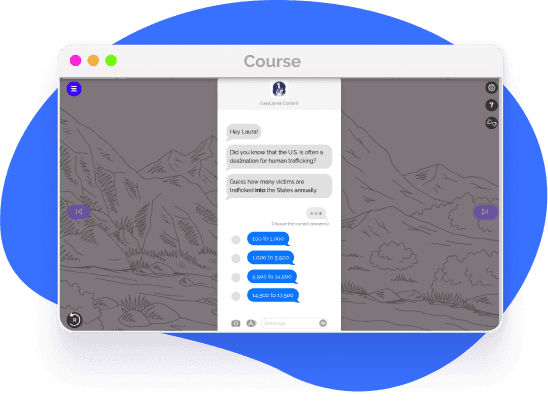
Federal reports estimate that 14,500 to 17,500 victims are trafficked into the U.S. annually. And according to the National Human Trafficking Hotline, in 2020, over 10,500 cases of human trafficking were reported within the U.S.
Facts about human trafficking
Victims of human trafficking can be any age and identify as any gender. They often share some type of vulnerability and are frequently isolated from family, friends, their country, and/or culture.
Here are some myths to look out for:
- -
Victims typically share some type of vulnerability.
- -
Victims can identify as any age or gender.
- -
Victims are often isolated from their family, friends, country, and/or culture.

Teach Employees how to identify Human Trafficking in Their workplace
EasyLlama offers a comprehensive training program designed to help employees identify, respond to, and prevent human trafficking in the workplace. The course will provide staff with the skills and knowledge needed to detect and stop this crime from occurring. Participants will learn how to recognize the signs of human trafficking and how to properly address the situation if they suspect it is happening.

Helping over 8,000 organizations create a safer, more productive workplace


















EasyLlama’s online training course guides employees to understanding and help preventing Human Trafficking in the workplace. This course will dive into the common traits of trafficked victims, how to report trafficking, and more. The course covers:


 Get more from EasyLlama