Maintaining online Data Privacy with the HIPPA Security Rule
In a 2003 HIPAA legislation update, along with the Privacy Rule, the Security Rule was put into place. The Security Rule requires administrative, physical, and technical safeguards to protect the confidentiality, integrity, and availability of electronic PHI, or ePHI for short.
Phishing Scams can prevent the safeguarding of ePHI
In addition to implementing Security Rule best practices to safeguard ePHI, it is important to understand the dangers of phishing scams and downloading information from unknown email addresses or websites. When using a portable device, be sure to remain in compliance with your company’s safety protocol in order to safeguard ePHI the same way you would on your normal work device.

The Scope of the Security Rule
The Security Rule has a different scope than the Privacy Rule. The Privacy Rule applies to all PHI, but the Security Rule only applies to ePHI. As a covered entity or business associate, HIPAA requires you to conduct a Risk Analysis of information systems and to implement security control procedures to protect PHI on these systems.
Let’s learn more about best practices for ensuring individual PHI is safe with the HIPAA Security Rule.
Only access information needed to perform your job responsibilities. Apply the Minimum Necessary Requirement rule when accessing PHI. When in doubt, always talk to your HIPAA compliance personnel if you have questions about encrypting your devices, destroying ePHI, or if you suspect any kind of security lapses at your facility.
Never leave test results, the reason for an appointment, or instructions about the appointment in a phone voice message. When taking a phone call, it is essential to verify the identity of the caller before providing any health information. Be careful not to discuss an individual's information in public areas, such as elevators, cafeterias, hallways, etc.
To ensure you are keeping an individual's ePHI secure, use the appropriate software for disposal. If you have ePHI that you would like to delete completely, please contact your HIPAA compliance personnel to do it right. There are specific legal requirements for disposal of ePHI, hence, always consult with your HIPAA compliance personnel before you delete PHI.

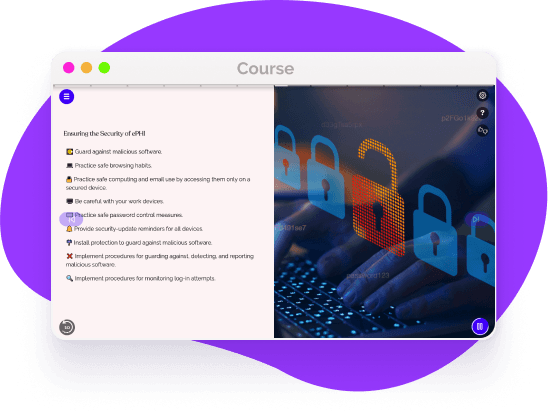
Ensuring the Security of ePHI
Ensuring ePHI safety requires you to do the following: Guard against malicious software; Practice safe browsing habits. Practice safe computing and email use by accessing them only on a secured device; Be careful with your work devices and always put them away in a secured place; Practice safe password control measures; Provide security update reminders for all devices; Install protection from malicious software; Have procedures in place for guarding against, detecting, and reporting malicious software; Implement procedures for monitoring log-in attempts and reporting discrepancies; Implement procedures for creating, changing, and safeguarding passwords.
Security Rule Safeguards
Let's look in detail at the three kinds of safeguards when it comes to ePHI for covered entities:
Here are some myths to look out for:
- -
Administrative Safeguards: These safeguards include risk analysis and management, access authorization, security awareness, and training and procedures to deal with security incidents.
- -
Physical Safeguards: These safeguards control physical access to your office and computer systems.
- -
Technical Safeguards: These include hardware, software, and other technology that limits access to ePHI.

Keep Data Privacy Private with HIPAA Security Rule Training
Training your staff on the HIPAA Security Rule allows them to better understand their roles and responsibilities in protecting patient data. Educating employees helps ensure compliance with the regulations and mitigates the risk of fines and other penalties. Training for covered entities and business associates on the HIPAA Security Rule also enables them to recognize and prevent potential security threats. EasyLlama’s HIPAA training addresses best practices for data privacy, secure passwords, working with health information remotely, data encryption, and much more.
Helping over 8,000 organizations create a safer, more productive workplace


















EasyLlama’s online training course helps prepare employees to navigate HIPAA. This course provides an in-depth examination of how to respond to a breach of confidential data and the best way to protect your patients. The course covers:


 Get more from EasyLlama