Handling Conflict
Conflict is a part of life that can make its way into the workplace. And as leaders, it is essential that we know how to handle and resolve difficult situations, whenever they may arise. Next, we will learn about different styles of conflict management and strategies for conflict resolution.
Strategies to resolve Conflicts
First, it is important to have a clear understanding of what is going on. Gather and analyze any data that is relevant to and supports the issue. Often when conflict comes to a head, it is actually the result of an unresolved underlying issue, so it can be helpful to look at the root cause. Next, determine and implement a solution. After the solution has been implemented, check in with the involved parties to ensure that the conflict has been solved and that no residual issues are exist that could ignite the conflict once again.
Types of Workplace Conflicts
Workplace conflict can be broken down into three main categories: conflicts related to tasks, relationships and values. (1) Conflict based on work-related issues such as assignments of tasks, sharing of duties, and goals. (2) Conflict based on personal issues as a result of different personalities, styles, and tastes. (3) Conflict based on people's values and beliefs such as ethics, politics, religion and cultural differences
As a leader, you will encounter situations when you have to manage conflict. This may be among your employees or even customers. Regardless, each situation will be unique and you will likely approach them in different ways. Let's look at a few styles of conflict management that you can employ as a leader.
Finally, the Collaborating style provides a win-win. Everyone gets something that they want. This is helpful when it is vital to preserve the relationships involved or the decision itself would have a major impact on the organization. As a leader, you may employ any number of these styles depending on the situation. There is no right or wrong and it will be up to you to determine which fits each situation best.
The Compromising style looks for a middle ground where each party is required to give in some. This can be useful as a leader if a deadline is looming or it necessary to make a decision in which the outcome does not have to be perfect. With the Competing style, the leader takes a firm stance, sometimes based on morals, and does not give in. Compromise is not involved in this style. It may be useful when the leader has to stand up for their rights or when a decision is imminent.
The Accommodating style of conflict management puts the needs of others before your own. It entails the leader giving in to the situation. This is useful when you want to keep the peace or when the issue is small and the end-result isn't of great importance. With the Avoiding style the leader abstains from dealing with the conflict by way of temporarily ignoring the issue or moving people out of situations to allow for a cooling-off period. This is usually a temporary fix until the issue can be fully dealt with.
Dealing with Difficult Employees
When you are in a leadership position, you may encounter employees who are difficult. You will need to deal with them, but there are a few ways that you can help temper the problematic situations that they may create.
Here are some myths to look out for:
- -
Remain calm.
- -
Be respectful.
- -
Show that you are engaged and listening.
- -
Put yourself in the employees' shoes and try to understand where they are coming from.
- -
Focus on what can be changed.

Engage Employees to Learn Conflict Management Skills
Managing conflict can be stressful for leaders, especially if they are newer to the role. EasyLlama’s Leadership Essentials course provides tips that employees and new leaders can follow to help become more comfortable with handling problematic issues that arise. With engaging videos, interactive quizzes, and scenarios that reflect real-world situations, conflicts can be resolved in no time.

Helping over 8,000 organizations create a safer, more productive workplace

















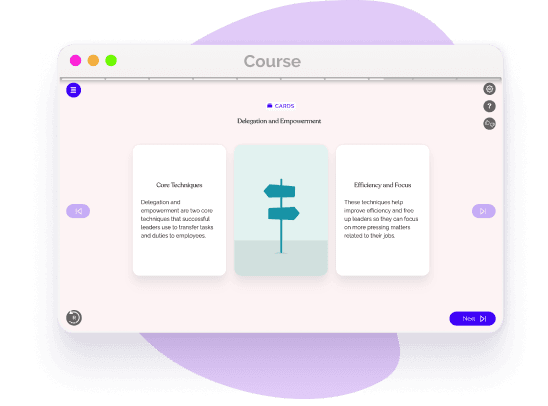
This online training course from EasyLlama explores foundational traits for an effective leader that can be applied in the workplace. Strong leaders can help maximize productivity, achieve business goals, motivate employees, handle conflict, and initiate action. The course covers:


 Get more from EasyLlama