Emergency Procedures
Explore vital emergency procedures in this chapter, covering evacuation protocols, fire-specific strategies, assembly point mapping, safety captain roles, the significance of regular fire drills, and the essential “Stop, Drop, and Roll” technique, all essential for ensuring safety in crises.

Effective Evacuation Strategies
A well-planned evacuation strategy is critical in emergency situations. It involves clear communication channels, understanding the quickest and safest routes out of the building, and the importance of remaining calm. Regular training and clear signage can significantly improve the efficiency of an evacuation.

In an emergency, defined roles and responsibilities can mean the difference between chaos and orderly evacuation.
Safety captains play a crucial role in emergency procedures, guiding evacuations, ensuring everyone is accounted for, and assisting those in need.
Regular fire drills are essential for ensuring everyone is familiar with evacuation procedures, helping to reduce panic and confusion during a real emergency.
The “Stop, Drop, and Roll” technique is the best way to extinguish flames on a person's clothing, a simple yet life-saving action in fire emergencies.

Designating Evacuation Routes and Assembly Points
Identifying and marking evacuation routes and assembly points are key components of an emergency plan. Routes should be clearly marked, free of obstructions, and well-known to all occupants. Assembly points must be safely located away from the building, providing a secure area for headcounts and further instructions.
Preparing for Fire Evacuation
Preparation and practice are key to successful evacuation during a fire.
Here are some myths to look out for:
- -
Regular updates and clear communication of evacuation plans
- -
Training in the use of emergency exits and assembly points
- -
Reinforcement of the “Stop, Drop, and Roll” technique in fire safety training

Stay Safe with Emergency Procedures Tips
Explore effective evacuation strategies, the role of safety captains, and the execution of fire drills. This training will equip your employees with the knowledge and skills necessary to lead or participate in an orderly evacuation during emergencies, ensuring personal and workplace safety.
Helping over 8,000 organizations create a safer, more productive workplace


















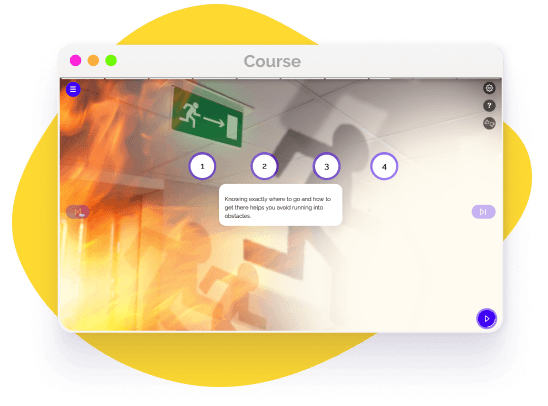
The course thoroughly explores topics such as types of fire, fire hazards, fire safety equipment (like fire extinguishers), and OSHA regulations. It aims to equip employees with the knowledge and skills to meet the organization's fire safety objectives.


 Get more from EasyLlama